
Choosing the right HDPE pipe machinery shapes how smoothly a manufacturing plant runs each day. The decision affects output, labor flow, and long-term operating costs. Many plants rush this choice. That often leads to stress later.
In US factories, things move fast because of tight deadlines, and the quality rules are super strict, too. Equipment has to keep going without all those constant fixes. It seems like if it breaks down a lot, everything just falls apart. Manufacturing plants deal with that pressure every day. That’s why reliable machines are the only way to handle it without messing up the whole process. When machinery fits the process, production feels steady. When it does not, problems show fast.
This guide explains what truly matters when selecting HDPE pipe machinery for U.S. production environments. The focus stays practical, clear, and grounded in real factory needs.
Machinery sets the rhythm of a plant. Every shift depends on it. When machines run smoothly, teams stay focused. When machines fail, pressure builds quickly.
One manufacturing facility struggled with frequent pipe thickness issues. The problem was not material quality. It was outdated equipment with unstable temperature control. Once upgraded, rejects dropped within weeks.
That example shows why equipment choice matters early. HDPE pipe machinery must support consistency without operator guesswork. Reliable systems reduce waste and keep morale strong.
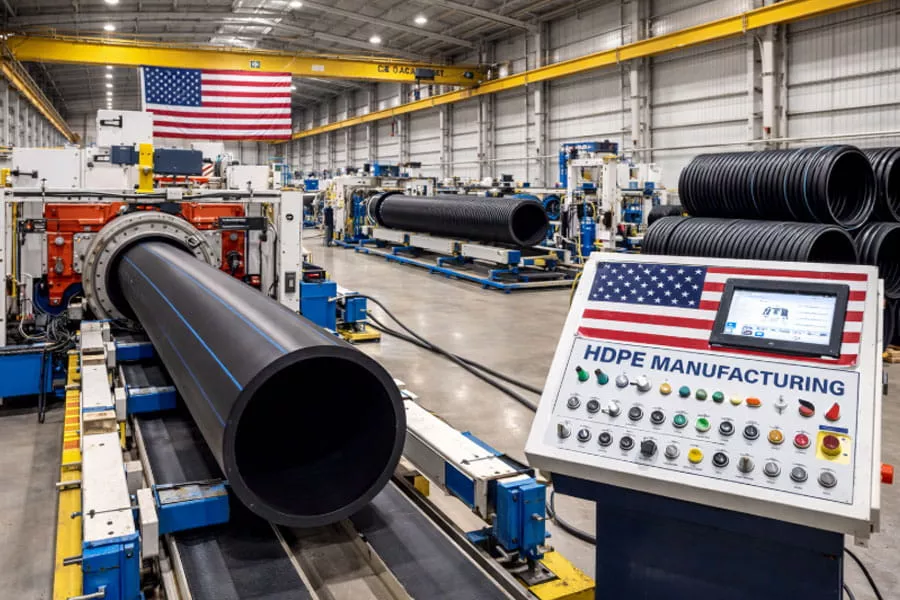
Every HDPE pipe plant relies on a set of core machines. Each one plays a specific role in shaping quality and output. Missing or mismatched equipment often creates bottlenecks.
The essential machinery includes:
Each component must work in sync. When one lags, the entire line slows. Proper selection ensures balanced flow from start to finish.
Not every plant makes the same type of pipe. Some focus on water supply. Others produce drainage or gas pipes. Diameter ranges vary widely.
Because of this, machinery must match the product range. Equipment designed for large pipes struggles with small diameters. That leads to uneven walls and slower output.
A plant expanding into new pipe sizes often learns this lesson late. Constant setting changes waste time. Operators feel drained.
Choosing flexible HDPE pipe machinery helps avoid that trap. Machines should support current products and future growth without strain.
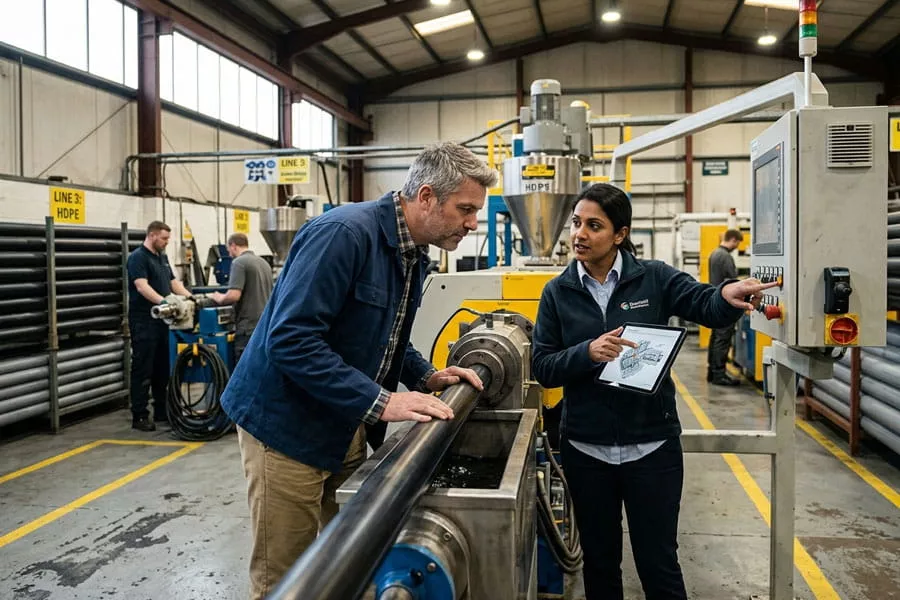
Machines may look similar, but usability differs greatly. Simple control panels reduce training time. Clear displays help operators react quickly.
Plants with high turnover benefit from intuitive systems. New hires learn faster. Mistakes drop.
Some manufacturers report smoother shifts after switching to simpler machinery layouts. Operators spend less time adjusting settings. More time goes into monitoring quality.
Ease of use also reduces fatigue. Calm teams make better decisions. That shows in the final pipe quality.
Speed attracts attention. Reliability keeps plants running. In the U.S., downtime costs rise quickly.
When machines fail, support response time matters. Spare parts access matters even more. Long waits hurt production schedules.
This is where experienced suppliers stand out. All Pipe Solutions Inc focuses on dependable equipment backed by responsive support. Their approach fits real manufacturing conditions rather than ideal scenarios.
Clear documentation also helps. Straightforward manuals allow teams to solve small issues independently. That saves time and stress.
Energy costs quietly shape long-term budgets. Efficient machinery uses less power while maintaining output quality.
Modern systems offer better heating control and motor efficiency. These improvements reduce monthly energy bills.
However, efficiency must stay practical. Overly complex systems frustrate operators. Simple designs win over time.
Maintenance costs also deserve attention. Easy access panels save labor hours. Standard parts lower replacement costs. These savings grow each year.
Choosing efficient HDPE pipe machinery protects margins without adding complexity.
U.S. standards demand tight tolerances. Pipe dimensions must remain consistent. Surface quality must stay clean.
Machinery plays a key role here. Stable extrusion pressure prevents wall thickness variation. Proper cooling prevents deformation.
Plants serving municipal or industrial projects cannot risk inconsistency. Reliable machinery supports compliance without extra inspections.
When equipment works correctly, quality control becomes easier. Teams spend less time fixing problems and more time meeting deadlines.
Choosing HDPE pipe machinery should feel clear and confident. The right setup supports daily work without constant intervention. It helps teams stay focused and productive.
All Pipe Solutions Inc helps U.S. manufacturers select equipment that fits real production demands. Their solutions prioritize reliability, usability, and long-term value.
Reach out today to explore machinery that supports steady output and future growth. The right decision now builds smoother operations for years ahead.
Request a Quote (519) 871-0751